Previous work & impact
Real examples of how trauma‑informed, neuro-inclusive and co‑produced approaches have supported services, teams and systems.
At Co Production & Me, our work ranges from ward‑level culture and experience projects to system‑wide personalised care and PHB programmes.
This page shares selected examples of what we have done, the challenges organisations were facing, and the impact of the work.
(Organisations are anonymised where needed, but more detail and references can be provided on request.)

Discharge pathways, admission avoidance and social safety
Supporting safer discharge and reduced readmissions
Context: A mental health Trust was experiencing pressure on inpatient beds, delayed discharges and concerns about people “bouncing” back into crisis shortly after leaving hospital.
What we did
- Co‑produced a review of discharge pathways with patients, families, ward staff, community teams and VCSE partners
- Identified gaps in social, practical and community‑based support that weren’t visible in standard discharge paperwork
- Mapped how people moved between inpatient wards, CMHTs, crisis support, social care and community organisations
- Co‑designed a more “socially safe” discharge model that built in follow‑up, connection and clearer shared responsibilities
Impact
- Teams reported greater confidence in discharge planning and earlier identification of community options
- People leaving hospital described feeling more supported and less “dropped” at the point of discharge
- The Trust was able to link this work to admission‑avoidance priorities and wider system‑level planning
One‑off PHBs for complex discharge and crisis support
Context: A health and social care system wanted to support people with complex needs who were spending long periods in hospital, experiencing repeated admissions or struggling to sustain community placements.
What we did
- Co‑designed a one‑off Personal Health Budget pathway, using a third‑party model to manage budgets on behalf of individuals
- Built the pathway around key transition points, particularly discharge and admission‑avoidance
- Embedded co‑produced conversations so people and families shaped how budgets were used
- Developed governance frameworks covering risk, finance, safeguarding and outcomes
- Led an evaluation process that captured personal outcomes, service flow, staff confidence and culture change
Impact
- One‑off PHBs were used to put in place tailored, time‑limited support that helped people leave hospital earlier and more safely, or avoid admission altogether
- Staff confidence increased around using PHBs in a safe, proportionate and creative way
- The system gained evidence that personalised approaches could improve experience while also supporting operational priorities
Linked health and social care personalised support
Context: Alongside the health PHB work, an adult social care service wanted to ensure people did not lose choice and control when moving from health to social care‑funded support.
What we did
- Co‑developed an adult social care personalised support pathway linked to the health PHB model
- Designed integrated referral routes across hospital, community teams and social care
- Clarified funding responsibilities and authorisation processes between organisations
- Created tools and guidance to help practitioners apply the model consistently in day‑to‑day work
Impact
- People experienced more continuity and fewer “cliff edges” when moving between health and social care
- Staff had clearer frameworks for making decisions that balanced flexibility and accountability
- The pathway supported long‑term independence rather than repeated short‑term crisis responses
Co‑producing service and pathway redesign
Context: A community mental health service and its VCSE partners wanted to redesign parts of their pathway, but knew that people who used services had often felt excluded from previous change work.
What we did
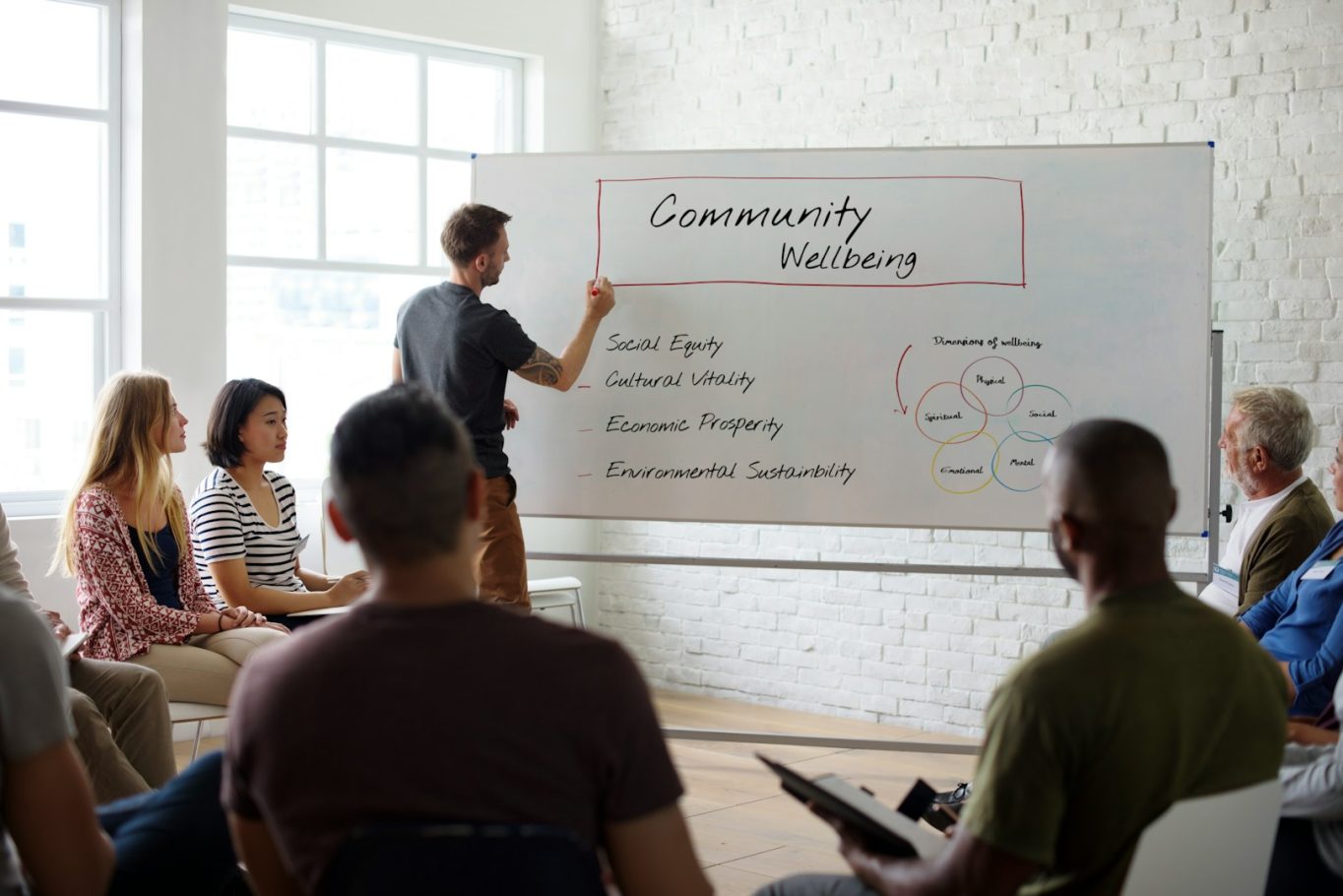
- Designed and facilitated trauma‑informed, neuro-inclusive co‑production sessions with people with lived experience, carers, staff and VCSE organisations
- Used accessible materials and multiple ways of participating (spoken, written, visual) to reduce barriers
- Worked with the group to map “what it is like now” and “what we want it to feel like” across key points of the pathway
- Turned this into a co‑produced set of design principles and practical changes
Impact
- People with lived experience reported feeling listened to and involved, not just consulted
- Staff gained clearer insight into how their service felt from the outside and concrete ideas for change
- The resulting pathway and plans carried more credibility with boards and partners because they were visibly co‑produced
Ward‑specific VOTE/VOICE‑style review
Context: An inpatient ward wanted to move beyond standard surveys and understand how culture, safety and inclusion were experienced over time by both patients and staff.
What we did
- Adapted a VOTE/VOICE‑style feedback framework into a bespoke, ward‑specific review tool
- Expanded the framework to include cultural identity, religious identity, individual values and relational experiences
- Implemented the review over six months to track changes in experience, rather than relying on single snapshots
- Supported the ward to analyse and act on the findings through regular reflective discussions
Impact
- The ward identified cultural and structural issues that were not visible in routine metrics
- Staff gained a deeper understanding of how everyday interactions affected trust, dignity and safety
- The work strengthened the ward’s Quality Improvement plans and aligned with Culture of Care standards in a way that felt real, not just compliance‑driven
Neuro‑inclusive and trauma‑sensitive workforce review
Context: A health and social care organisation was concerned about staff burnout, sickness absence and the experiences of neurodivergent colleagues.
What we did
- Conducted a workforce and workplace review, including staff listening sessions, focus groups and surveys
- Explored psychological safety, communication, meeting culture, cognitive load, adjustments and belonging
- Reviewed key HR and wellbeing processes (e.g. absence, performance management, return‑to‑work, adjustments)
- Provided a practical improvement plan with “quick wins” and longer‑term priorities
Impact
- Leaders had a clearer picture of how policies, systems and behaviours were affecting staff day‑to‑day
- Immediate changes were identified (e.g. adjustments to meetings, communication and information flow) that reduced stress and overwhelm
- The organisation began to embed a more consistent, compassionate approach to supporting neurodivergent staff and those affected by trauma
Feedback from people and partners
Across different pieces of work, repeated themes in feedback include:
(Where appropriate, references and more detailed testimonials can be shared privately.)
From staff
- Feeling more confident in understanding and responding to people’s wider needs
- Greater clarity about pathways, responsibilities and available support
- Seeing co‑production, trauma‑informed and neuro-inclusive ideas translated into practical tools they can use
From leaders
- Appreciating clear, well‑structured outputs that are board‑ready without losing depth
- Valuing how the work bridges strategy, governance and lived experience in a way that supports decision‑making
From VCSE partners
- Feeling genuinely valued as equal partners rather than “add‑ons”
- Noting improved communication and more joined‑up work between statutory and community services
From people with lived experience
- Feeling listened to, respected and involved in decisions about their care and about services
- Describing greater understanding, clearer information and support that fits better with their lives
How we can share more detail or find out more?
If you’d like to know more about any of these examples, or to explore similar work in your own service or system, I’d be happy to talk.